Brought to you by

Tetra Pak’s approach to sustainability is shaped by its brand promise to 'protect what’s good'. This encompasses the importance of protecting food, and futures, for which driving environmental excellence is fundamental Find out more.
Everything you need to know about recycling cartons
Food & Beverage Cartons includes:
Almond milk carton
Beverage carton
Drink carton
Foil lined carton
Food carton
Juice box
Liquid Paperboard (LPB) carton
Long-life milk carton
Milk carton
Oat milk carton
Popper (juice)
Soy milk carton
Tetra Pak
Non-foil lined carton
Beverage Cartons
Learn more about recycling food and beverage
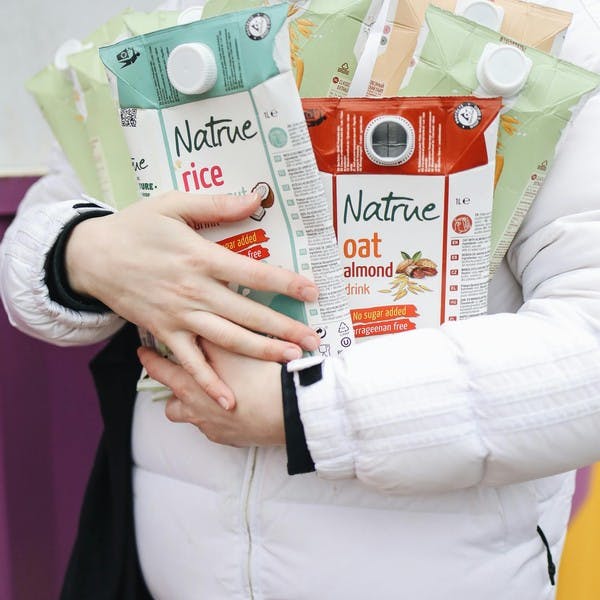


How to recycle cartons
For most Australians, cartons containing fresh products that are found in the fridge at stores can be recycled at home. Long-life cartons such as long-life milk (found on shelves in stores) are not accepted by all councils for recycling.
Use the information on this page to see if cartons can be put in the recycling bin in your council area or check directly with your council.
Fresh vs long-life cartons
For more than 60 years, liquid paperboard has been used to package a wide range of foods and beverages including milk, juice, cream, custard, sauces and soups.
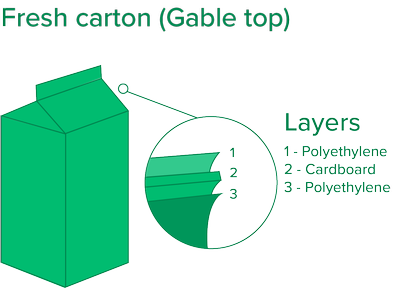
Cartons containing fresh products (non-foil lined):
-
These cartons have gable tops and are generally found in the fridge at stores.
-
They are made from a layer of paperboard sandwiched between two layers of very thin plastic.
-
Fresh cartons are accepted for recycling by most councils in Australia. Search your postcode above to find out whether you can recycle these cartons in your household recycling bin.
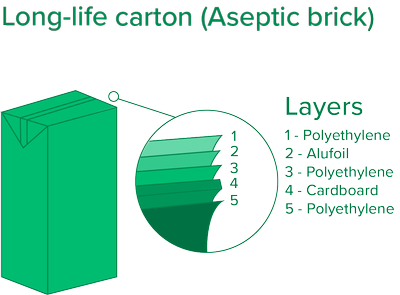
Long-life cartons (foil lined):
-
These cartons are generally brick-shaped (called aseptic cartons or bricks) and contain long-life products such as long-life milk. They can be found on shelves in stores (generally not in the fridge).
-
Aseptic cartons (UHT or long-life packs) are made from paperboard with a thin plastic layer on the exterior and interior of the carton, as well as a very thin aluminium foil layer on the interior to keep the contents fresh for long periods of time without the need for any preservatives.
-
The products in the cartons are sterilised before being packaged and, as the cartons fully seal the contents, they do not need to be refrigerated before opening. This results in savings in energy during storage and transport.
-
Foil lined cartons are not accepted for recycling by some councils in Australia. Search your postcode above to find out whether you can recycle these cartons in your household recycling bin.
How can I tell the difference?
Generally, long-life cartons are shaped like bricks (i.e., they don't have a gable top), have a foil lining and are not kept in the fridge in supermarkets. If you're not sure whether your carton has a foil lining, use scissors to make a small cut at the top of your carton. If there is a silver lining inside the carton, the carton is foil lined.
 |
 |
Why recycle?
Half a billion food and beverage cartons are used each year in Australia; They're made from a material called liquid paperboard (LPB), which makes up the largest proportion of the packaging – about 88% of a Tetra Pak 1 litre fresh milk carton for example. When the cartons are recycled, the materials are used to make new paper products, keeping resources in use and out of landfills.
The lightweight nature of cartons means they require less energy to transport and refrigerate than other beverage packaging.
What happens to them?
Ensure cartons are empty and flattened before placing them loosely in your recycling bin. By flattening your cartons, you will help the carton reach the paper recycling stream at the sorting facility. From there the carton can be recycled into new paper products like boxes.
Cartons collected through Container Deposit Schemes are more likely to be turned into paper products with a higher value such as paper towels. This is because the collection streams are separated, reducing contamination from other recycled products like plastic and glass bottles.
Cash back for recycling
All Australian states and territories have a Container Deposit Scheme that accepts eligible beverage cartons such as flavoured milk and juice cartons under 1 litre. You can take eligible cartons to your local drop-off point to receive a 10c refund for each carton recycled.
Frequently Asked Questions
Are milk cartons recyclable?
The recyclability of milk cartons in Australia depends on the type of carton. Regular fresh milk cartons; Cartons that are typically stored in the refrigerator are generally considered to be recyclable.
Check with your local council: Many councils accept them, but not all so it’s best to check with them directly or use the information on this page to find out if you can put them in your recycling bin at home.
Long-milk milk cartons: These cartons, often found on supermarket shelves, are made with a combination of cardboard, plastic and aluminium, making them harder to recycle than regular milk cartons. Check with your local council: Some councils will allow you to put them in your household recycling bin, but not all so it's best to check directly or use the information on this page to find out if they are accepted.
What is a milk carton made of?
A milk carton is primarily made of paperboard, which is a low-carbon, renewable material that is similar to waxed cardboard. However, it also has a thin layer of polyethylene (plastic) to make it waterproof. Some cartons, especially long-life ones, may also have a thin layer of aluminium for added protection. So, a milk carton is a combination of paperboard, plastic and sometimes aluminium.
Are juice cartons recyclable?
The recyclability of juice cartons in Australia depends on the type of carton. Regular juice cartons. Cartons that are typically stored in the refrigerator are generally considered to be recyclable. Check with your local council: Many councils accept them, but not all so it's best to check with them directly or use the information on this page to find out if you can put them in your recycling bin at home. Long-life juice cartons. These cartons, often found on supermarket shelves, are made with a combination of cardboard, plastic and aluminium, making them harder to recycle than regular cartons. Check with your local council: Some councils will allow you to put them in your household recycling bin, but not all so it’s best to check directly or use the information on this page to find out if they are accepted.
Are long-life milk cartons recyclable?
Long-life milk cartons are recyclable, but they are not accepted by all councils and recyclers. This is due to an added layer of aluminium on top of the cardboard and plastic for added protection, which makes them harder to recycle. Check with your council or use the information on this page to see if you can put long-life cartons in your recycling bin at home.
Can you recycle almond milk cartons?
The recyclability of almond milk cartons in Australia depends on the type of carton. This also applies to other types of milk substitutes such as oat and soy. Regular cartons; Cartons that are typically stored in the refrigerator are generally considered to be recyclable. Check with your local council: Many councils accept them, but not all so it's best to check with them directly or use the information on this page to find out if you can put them in your recycling bin at home. Long-life cartons; These cartons, often found on supermarket shelves, are made with a combination of cardboard, plastic and aluminium, making them harder to recycle than regular cartons. Check with your local council: Some councils will allow you to put them in your household recycling bin, but not all so it’s best to check directly or use the information on this page to find out if they are accepted.
Are milk cartons biodegradable?
Biodegradable refers to a material's ability to decompose or break down by living organisms. There are no industry standards or certifications? for the term. Products making this claim may degrade (as will most items over time), but without a specified timeframe, this term can be very misleading. A piece of plastic that is biodegradable could take hundreds of years to degrade, which is not a good environmental outcome. Milk cartons are made of cardboard, plastic and sometimes aluminium. While these materials may degrade over a long period of time, it is still harmful to the environment and not a preferred option to recycling. Materials that are left to break down in the environment or landfill will release greenhouse gas emissions into the atmosphere and the plastics will break down into microplastics which do not completely decompose. Products claiming to be biodegradable should therefore be considered with caution.
Do milk cartons go in paper recycling?
Very few councils in Australia have a separated bin for paper and cardboard. If your council has provided you with a separate paper and cardboard recycling bin, it is best to check with them directly to find out which bin milk cartons should be put in. Generally, food and beverage packaging should not be placed in paper and cardboard recycling bins, so co-mingled recycling or the regular garbage bin will likely be the preferred option. If your workplace or business has separated paper and cardboard recycling from co-mingled recycling, generally only paper and cardboard items are accepted. As milk cartons contain a thin layer of plastic and sometimes aluminium, it is best to check directly with the service provider to see if they are accepted.